










Authors of the best publications of our institutes are acknowledged each year. On 5 March, 2025, Zsolt Boda, General Director, handed out the awards at the annual meeting of the Centre for Social Sciences, followed by brief presentations of the research findings.
The publications and their authors awarded are the following:
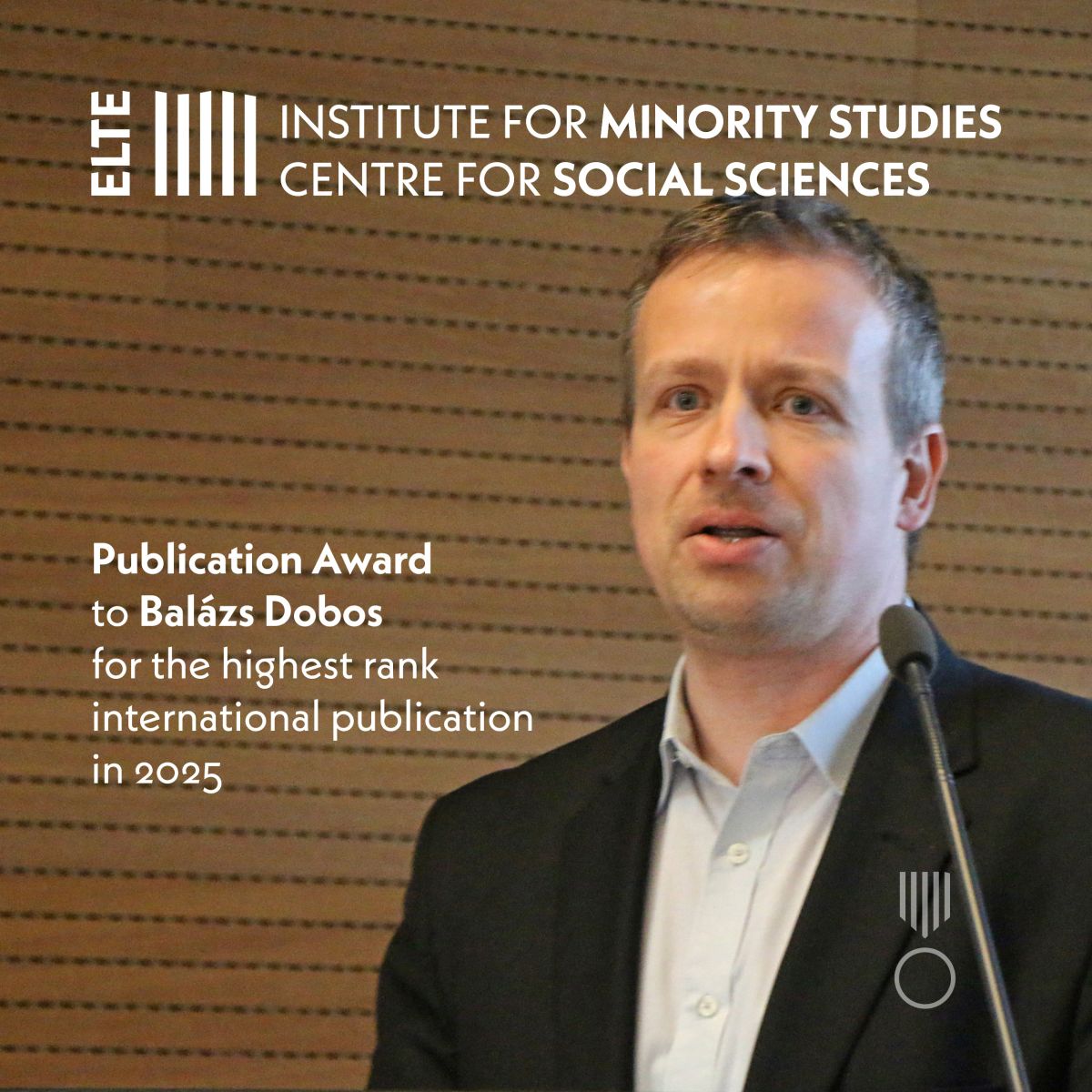
Balázs Dobos, Institute for Minority Studies, Center for Social Sciences, ELTE
Using the examples of Hungary, Estonia, Croatia, Serbia, and Slovenia, the books analyzes how different forms of minority cultural autonomy, minority self-governments and councils, and their elections influence the lives of minorities, and how and according to what principles they are established in each country. The book follows this path from the adoption of autonomies through the polling stations to its implementation, without avoiding sensitive issues such as the phenomenon commonly known as ethno-business.
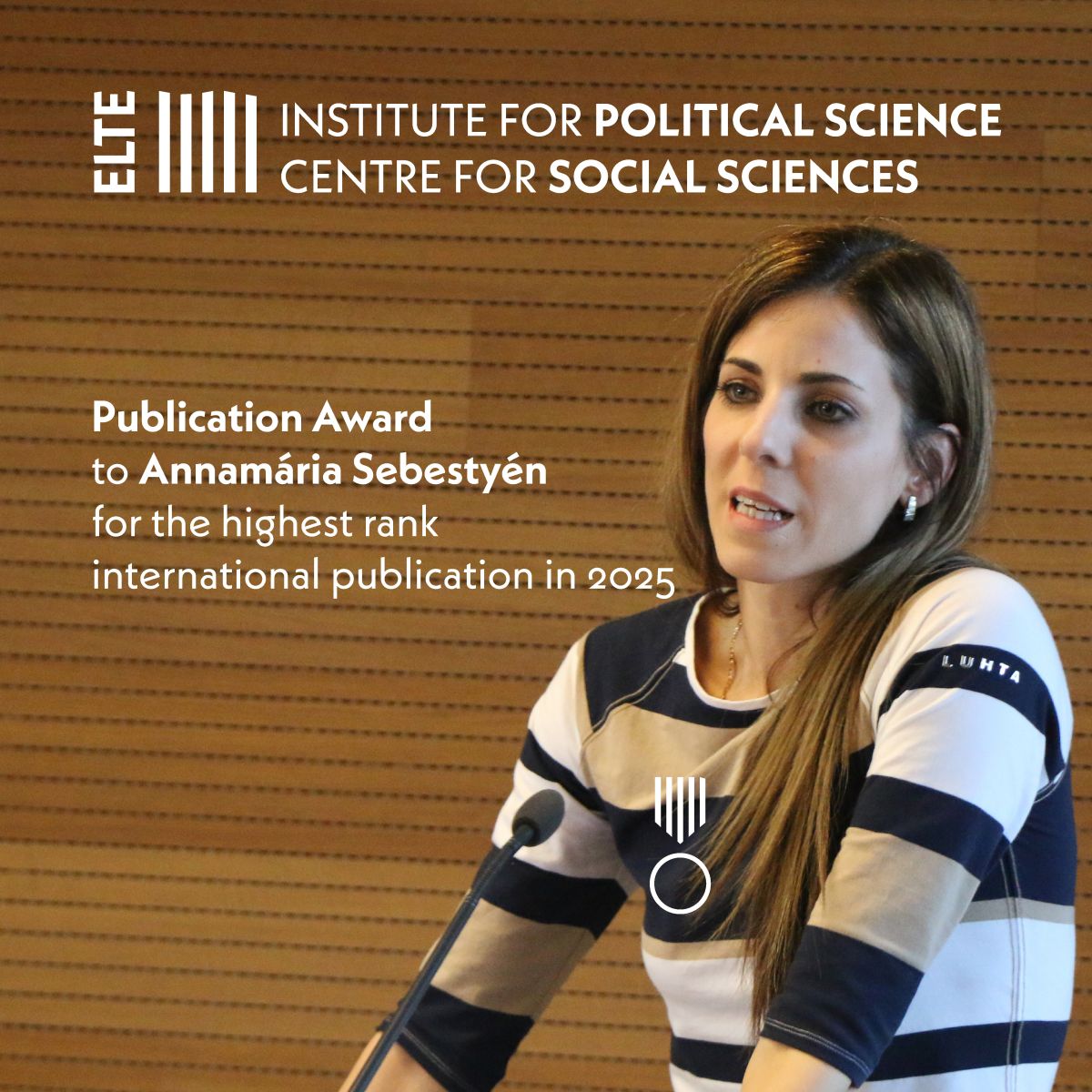
Annamária Sebestyén, Institute for Political Studies, Centre for Social Sciences, ELTE
Why do young people join political parties nowadays? What pathways of political socialization lead them to parties, and how does socialization influence participation intentions in Hungary? In her article "Political Socialization Scenarios Leading to Party Membership in an Autocratizing Democracy", Annamária Sebestyén addresses these questions based on life-history interviews with 40 young party members. The findings show that young party members rarely have exceptional backgrounds. Their political socialization is often fragmented and conflictual, and many join parties with unformed political views and motivations. Often, the decision to join is shaped more by the experience of community – empathy, personal attention, and the feeling that one’s presence and contribution matter – than by party programs. These findings suggest that, in addition to their mobilizing role, political parties also play a compensatory socialization role today, providing the political experiences and patterns that help shape the next generation of political elites.
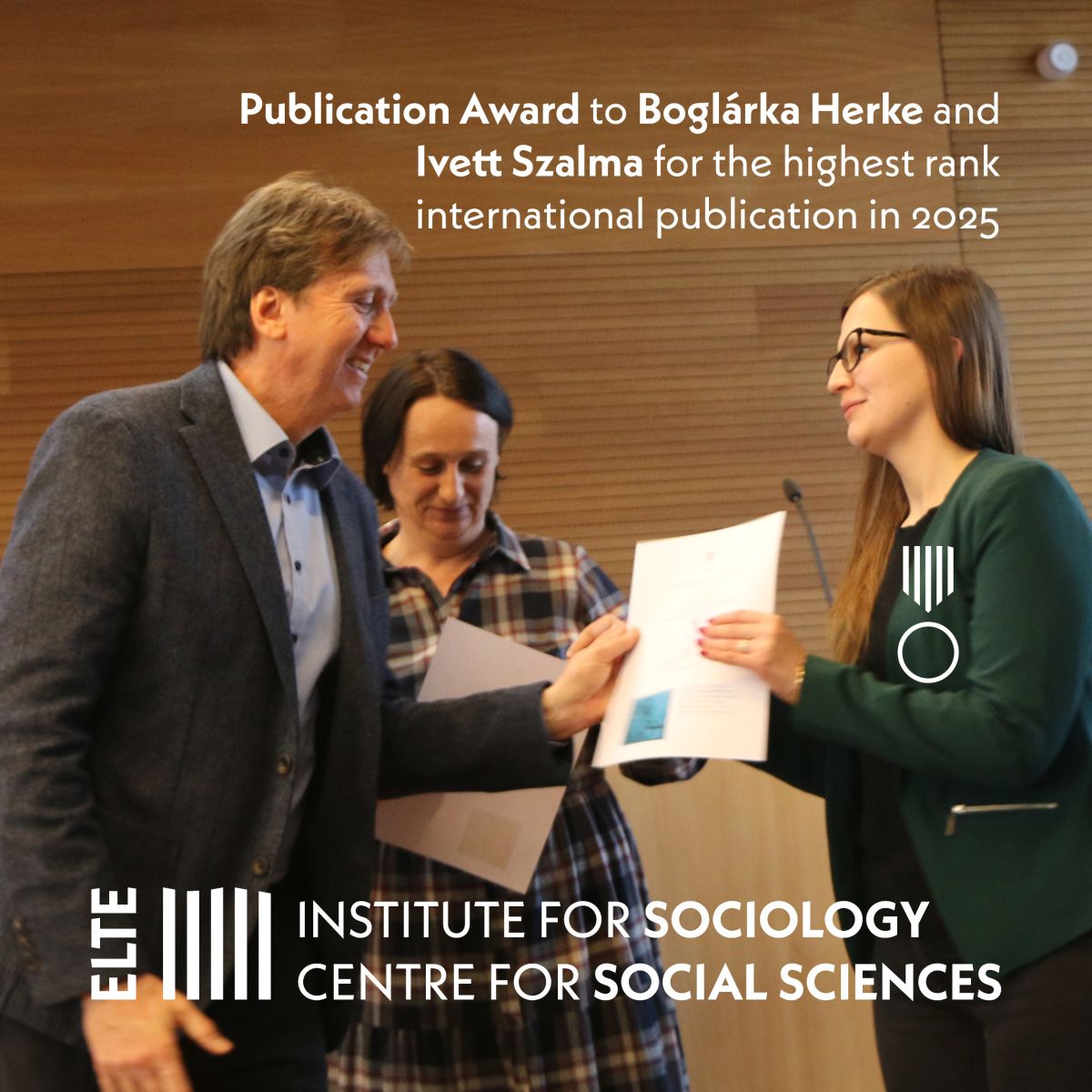
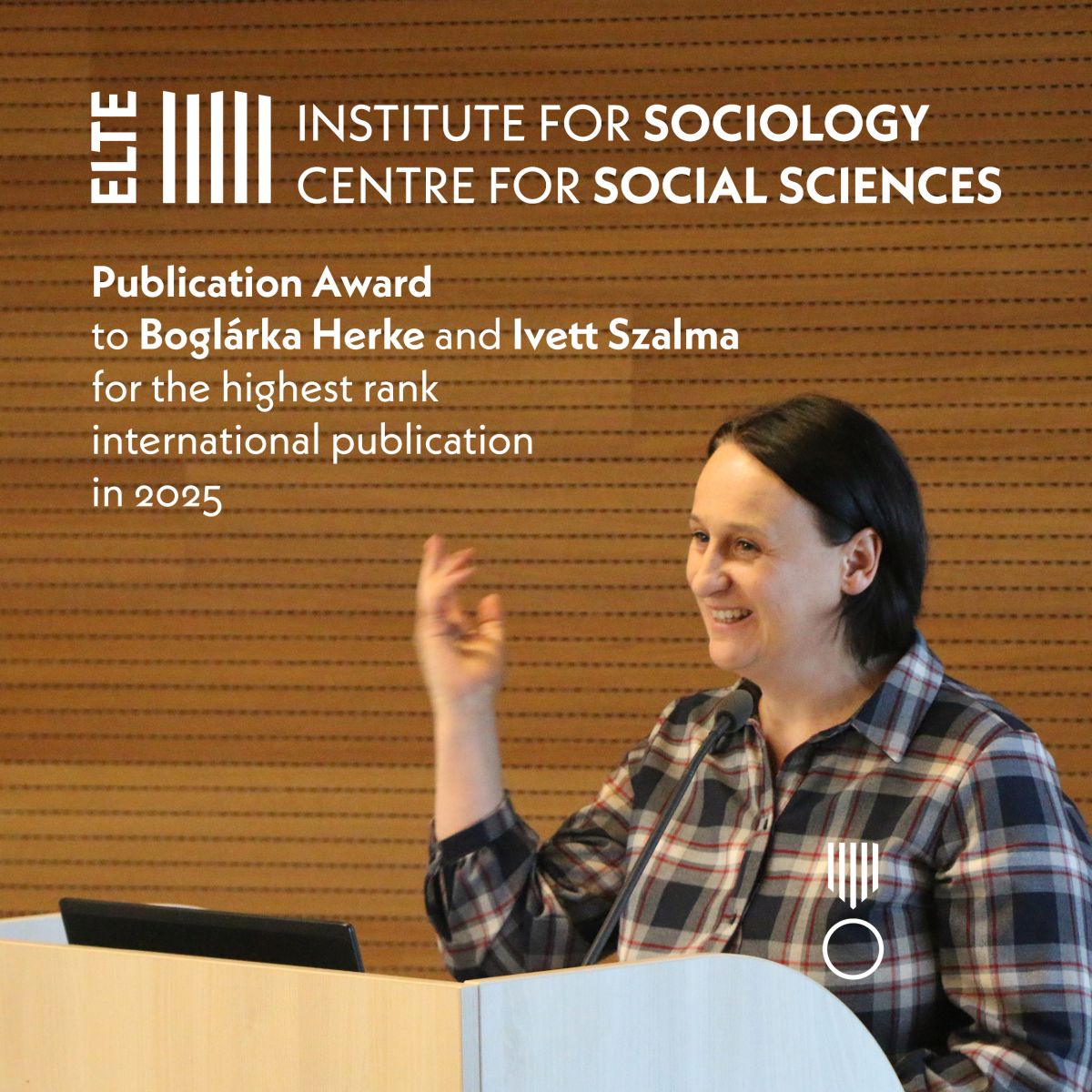
Ivett Szalma and Boglárka Herke, Institute for Sociology, Centre for Social Sciences, ELTE
How do anti-immigration and pronatalist family policy rhetorics intersect in Hungarian governmental discourse? This study examines this question through a thematic analysis of 221 governmental speeches and articles published between 2014 and 2022. The findings show that the central claim of the discourse is that demographic problems should be addressed not through immigration but by increasing the number of “Hungarian children” being born.
This framing is constructed through several mutually reinforcing themes: directly through narratives of cultural threat and the “will of the people,” and indirectly through references to sovereignty, security, economic arguments, and deservingness. The analysis also highlights a specific feature of the Hungarian case: migration is portrayed as a threat to heteronormative, “traditional” family forms and values. This differs from Western European populist discourses, where migration is more often framed as a threat to gender equality and LGBTQ+ rights.
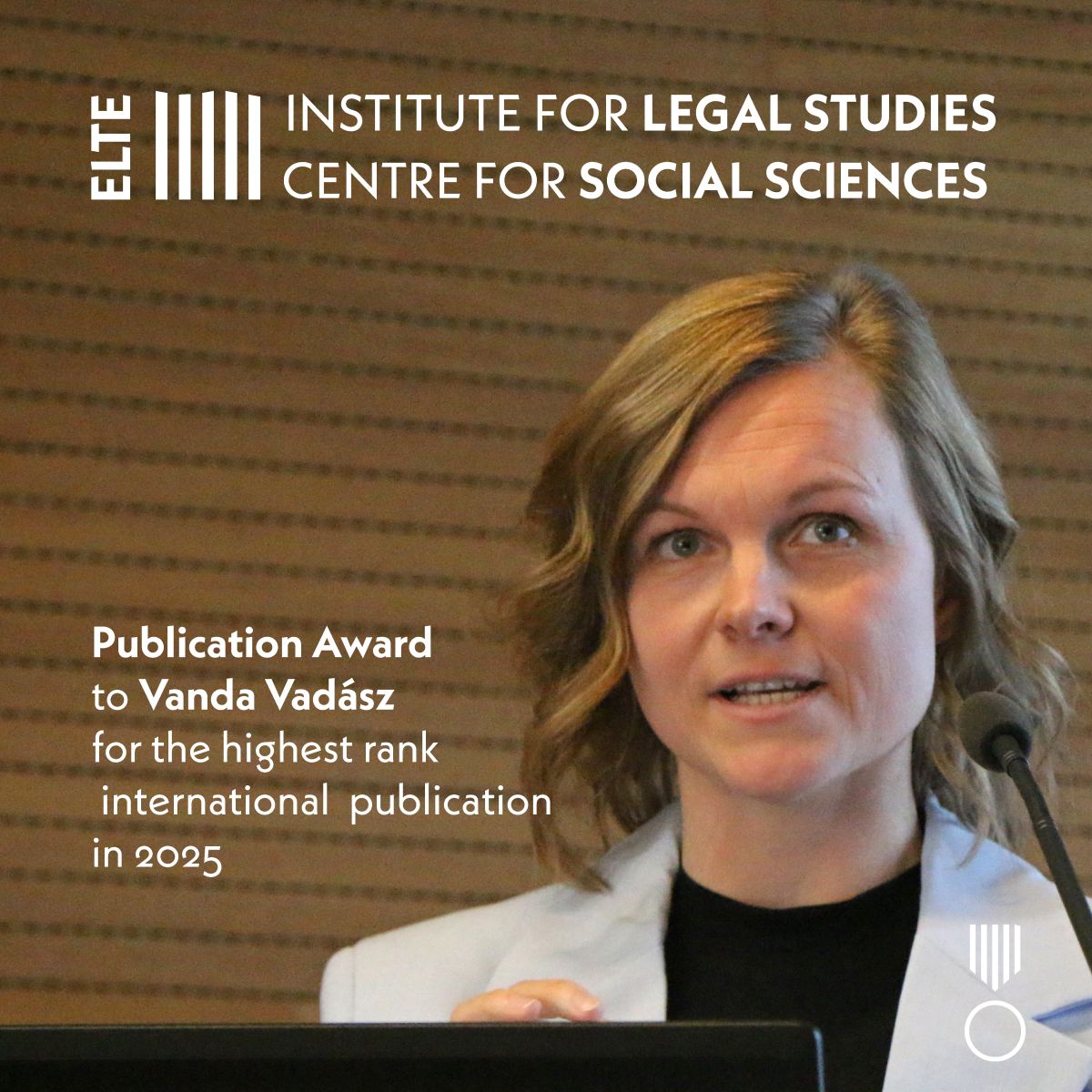
Vanda Vadász, Institute for Legal Studies, Centre for Social Sciences, ELTE
The study addresses the issue of cultural objects that have disappeared from public collections. Its main argument is that safeguarding cultural heritage owned by the state is a fundamental- yet often overlooked - responsibility of public collections, requiring their active engagement. Drawing on an initiative launched by the Hungarian National Museum in 2023, the authors illustrate the difficulties involved in tracing and recovering such objects, while also highlighting the legal and institutional tools that may support the protection of cultural property.
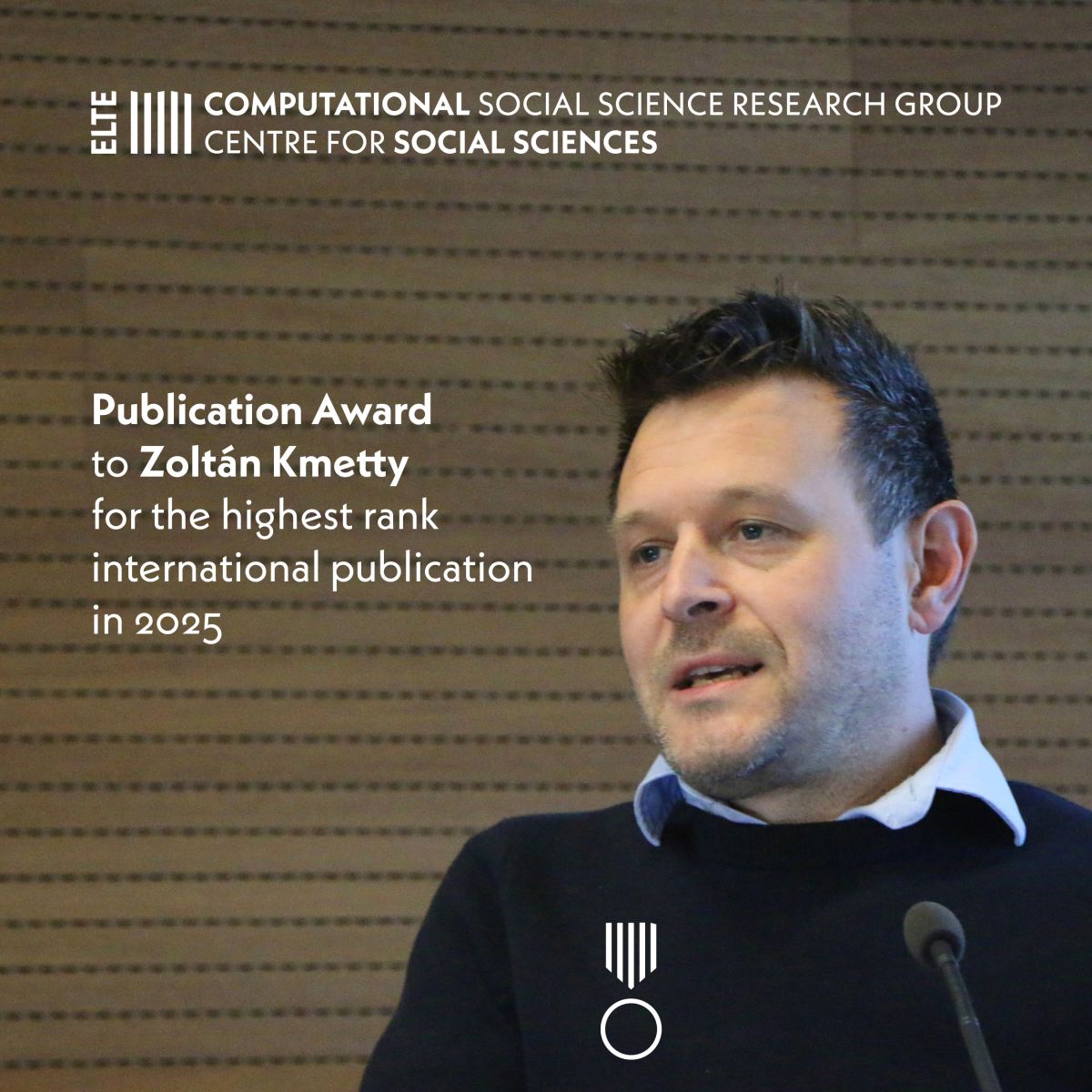
Zoltán Kmetty, Computational Social Science Research Group, Centre for Social Sciences, ELTE
Is YouTube really as polarized as we think?
Most studies on online political polarization focus only on what’s visible, like public comments. But what about the "silent majority" who watch videos without ever leaving a trace?
Our latest study analyzed data from 758 Hungarian users to uncover the "invisible" side of political engagement:
-
Commenters are more polarized: Users who actively comment tend to stay within their own political camps.
-
Viewers are more diverse: Those who only watch videos are actually exposed to a much wider range of political viewpoints.
-
The Bias Gap: Relying only on public data (like comments) can lead researchers to overestimate the power of "echo chambers."
The takeaway? YouTube might be less segregated than it looks on the surface. To truly understand online polarization, we need to look beyond the comments section.